Most homeowners think about roof damage when they see a leak, a stain on the ceiling, or shingles on the ground after a storm. In reality, one of the most common sources of roof wear happens much more quietly. Daily sun exposure gradually degrades roofing materials long before obvious damage appears. For homeowners researching roof repair brigham city, it helps to understand how heat and ultraviolet light affect the surface over time and why that damage often shows up in stages rather than all at once.
Sun damage is easy to underestimate because it usually does not create a sudden failure. Instead, it dries out protective oils, weakens exposed surfaces, and reduces a roof’s ability to handle normal weather. What begins as gradual fading or minor granule loss can later turn into cracking, curling, exposed fasteners, and moisture intrusion. By the time the problem becomes visible from the ground, the roof may already be less flexible and less effective at protecting the layers beneath it.
Why Constant Sun Exposure Matters
Roofing materials spend every day exposed to direct light, heat, and surface temperature fluctuations. That repeated exposure puts stress on shingles, sealants, flashing, and vents. Asphalt shingles are especially vulnerable because their outer surface relies on granules and asphalt compounds to protect against the weather. As those materials age, they lose some of their resilience.
Ultraviolet rays gradually break down the roof’s outer layer. The surface can begin to dry out, making shingles less pliable than when first installed. A roof that has lost flexibility is more likely to crack when temperatures change or when the wind lifts the edges. Even when the damage looks small at first, the protective layer is no longer performing at the same level.
Heat adds another problem. Roofing materials expand as they warm up and contract when they cool down. That movement happens over and over through seasonal changes and even in a single day. Over time, the repeated cycle can stress seals, loosen edges, and create small openings around vulnerable areas.
The First Signs Often Appear on the Surface
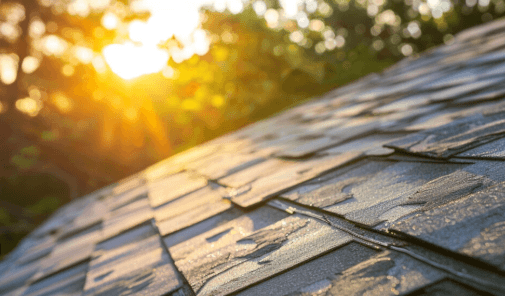
Sun damage usually starts with changes that seem cosmetic. Shingles may look faded, patchy, or dull compared with newer sections. Granules may begin collecting in gutters or near downspouts. On their own, these details may not look urgent, but they often indicate that the outer surface is wearing down.
As the surface becomes more brittle, shingles may begin to curl at the corners or crack across exposed areas. That matters because shingles are supposed to lie flat and overlap tightly. Once they lose that shape, wind and moisture have an easier path underneath them. A roof does not have to have large sections missing to become vulnerable. Small changes in shape and texture can be enough to reduce protection.
Sealants can also show early signs of sun wear. Areas around roof penetrations, flashing joints, and exposed transitions may begin to dry, shrink, or split. Once that happens, water has a better chance of entering during rain or snow, even if the surrounding shingles still look mostly intact.
How Sun Damage Leads to Water Problems
A roof becomes a bigger problem when worn areas start letting water in. Cracked or lifted shingles can give moisture a path beneath the surface, where it can reach the underlayment or the wood below. What starts as sun-related wear can turn into a leak once those outer materials stop holding up.
That kind of moisture is not always obvious at first. It may wet a section of roof decking, soak into insulation, or travel along framing before anything shows up inside the house. By the time a ceiling stain appears, the problem may have been developing for a while, which is why repair costs can catch homeowners off guard.
Sun-related wear also makes the roof less prepared for other weather events. A brittle shingle is more likely to break during a storm. Dried sealant is less likely to hold during heavy rain. A roof weakened by heat may appear fine in calm weather, then begin taking on water once the next period of stress arrives.
The Areas That Usually Age Faster
Some parts of a roof wear out faster than others. Sections that sit in full sun for hours each day usually break down sooner than areas with more shade. Roof features can also become trouble spots because they interrupt the surface and depend on tight seals to keep water out.
Flashing around chimneys, skylights, and vents often shows age earlier than the rest of the roof. These areas bring together metal, sealant, and layered roofing materials in a tight space. After years of heating up in the sun and cooling back down, those materials can shift enough to loosen the seal, leaving the area more exposed.
Ridge caps and outer edges also tend to wear down sooner because they are exposed to direct sunlight and strong winds simultaneously. When those sections start to weaken, the shingles nearby often become more vulnerable too.
Catching the Problem Early Can Keep Repairs Smaller
The sooner sun damage is found, the easier it usually is to deal with. If the problem remains limited to the surface, repairs may involve replacing damaged shingles, resealing worn areas, or fixing flashing that has begun to loosen. When left unchecked, the damage can extend below the surface and affect the decking and other nearby materials.
That is why a roof inspection matters once signs of wear begin to show. It is not only about spotting what looks worn from the outside. It is also about determining whether moisture has already gotten beneath the roofing material. A proper inspection should look at shingle condition, granule loss, raised fasteners, flashing, attic moisture, and ventilation.
Ventilation is especially important in a roof that sees long periods of sun exposure. Excess heat trapped in the attic can increase stress on roofing materials from below. A roof already aging from sunlight may wear even faster if heat cannot escape properly.
See also: Seniors Equity Loan: How to Access Your Home’s Value After Retirement
A More Practical Way to Think About Sun Damage
It helps to think of sun exposure as a slow force that reduces the roof’s margin for error. The roof may still look serviceable for a while, but each season of drying, fading, and thermal movement makes it less able to resist the next challenge. By the time visible damage becomes obvious, the materials may already be well past their strongest condition.
For homeowners dealing with aging shingles, surface cracking, or signs of heat-related wear, a prompt inspection is often the best way to contain the issue. Waiting can allow a simple surface problem to become a deeper repair requiring underlayment, decking, and indoor damage repair. In many cases, understanding how sunlight affects roofing materials is what helps homeowners act before a worn roof becomes a larger roof repair brigham city problem.