Air dryers are an essential component in many industrial and commercial systems, especially in compressed air setups. Understanding how an air dryer works can help you optimize performance, reduce maintenance issues, and ensure the longevity of your equipment. This guide will walk you through the types of air dryers, their operating principles, and practical tips for maximizing efficiency.
The Importance of Air Drying in Compressed Air Systems
Compressed air is widely used in manufacturing, automotive, and other industrial sectors. While air is a vital tool, it often contains moisture that can lead to corrosion, freezing, or damage to pneumatic equipment. This is where air dryers come into play. By removing water vapor from compressed air, air dryers protect sensitive equipment, improve efficiency, and prevent costly downtime.
Moisture in compressed air systems can cause rust inside pipes, reduce the lifespan of machinery, and even affect product quality in industries like food processing or pharmaceuticals. Learning how does an air dryer work provides insights into why proper air treatment is critical for operational reliability.
Types of Air Dryers
Air dryers come in several varieties, each designed for specific applications and performance levels. Understanding these types is the first step in grasping how they function.
Refrigerated Air Dryers
Refrigerated air dryers are the most common type used in industrial settings. They operate by cooling the compressed air to condense water vapor into liquid form, which is then removed.
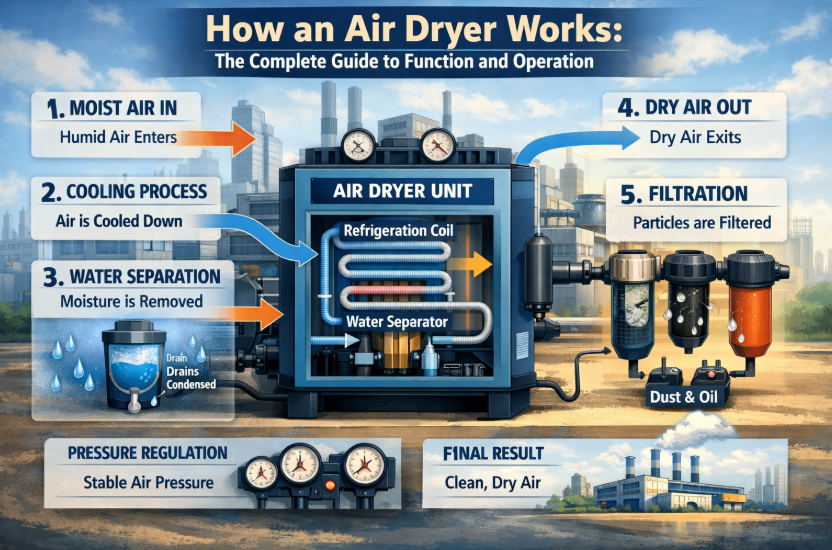
The process begins with hot, moist air entering the dryer. The air passes through a heat exchanger, where it is cooled to near 3°C to 5°C. As the temperature drops, water vapor condenses, forming droplets. These droplets are collected in a separator and drained automatically, leaving dry air to flow into the system.
Refrigerated dryers are efficient, relatively low-cost, and suitable for general industrial applications. They are particularly effective where air quality requirements are moderate.
Desiccant Air Dryers
Desiccant air dryers use moisture-absorbing materials, such as silica gel or activated alumina, to remove water vapor from compressed air. They are ideal for applications requiring extremely low humidity levels, such as medical or electronic manufacturing.
The operation involves passing compressed air through a desiccant bed. The desiccant attracts and holds water vapor, producing dry air. Over time, the desiccant becomes saturated and must be regenerated. Regeneration methods vary and include heat, purge air, or pressure swing techniques.
Understanding how does an air dryer work in desiccant systems helps you appreciate their role in high-precision environments where moisture control is critical.
Membrane Air Dryers
Membrane air dryers are compact and lightweight solutions that use selective permeable membranes to separate water vapor from compressed air. Air passes through hollow fibers that allow water molecules to diffuse out while retaining dry air.
These dryers are often used in remote locations, small workshops, or applications where low flow rates are required. They are energy-efficient and require minimal maintenance compared to traditional refrigerated or desiccant dryers.
Key Components of an Air Dryer
Knowing the main components of an air dryer helps in troubleshooting and maintenance. While designs vary, most air dryers share some common elements.
- Inlet and Outlet Ports: The entry and exit points for compressed air.
- Cooling Mechanism or Desiccant Bed: Depending on the type, this component either cools the air to condense moisture or absorbs water vapor.
- Separator or Drain System: Collects condensed water and removes it from the system.
- Control System: Monitors temperature, pressure, and humidity to ensure efficient operation.
These components work together seamlessly to ensure the system delivers dry, clean air consistently.
How Does an Air Dryer Work Step by Step
Understanding how does an air dryer work is easier when broken down into steps. While the details vary by type, the general principles are similar.
- Air Intake: Moist air enters the dryer from the compressor.
- Cooling or Moisture Removal: In refrigerated dryers, the air is cooled to condense water. In desiccant dryers, the air passes through a moisture-absorbing material. Membrane dryers selectively remove water vapor.
- Separation of Moisture: Condensed water is separated and drained, leaving dry air.
- Delivery of Dry Air: The processed air exits the dryer and enters the pneumatic system, ready for use.
- Regeneration (if applicable): Desiccant dryers periodically regenerate the desiccant to maintain efficiency.
This step-by-step view clarifies the mechanics behind air drying and why each component is essential for smooth operation.
Factors Affecting Air Dryer Performance
Several factors influence the performance of air dryers, and understanding them ensures optimal results.
- Air Temperature and Humidity: High ambient temperatures or high humidity levels increase the workload for the dryer.
- Airflow Rate: Exceeding the recommended airflow capacity can reduce drying efficiency.
- Maintenance Practices: Regular cleaning and timely replacement of filters, desiccants, or cooling fluids are crucial.
- System Pressure: Air dryers operate best within specified pressure ranges. Deviations can affect moisture removal.
By monitoring these factors, users can maintain dryer performance and avoid common problems such as wet air, freezing, or system corrosion.
Common Applications of Air Dryers
Air dryers are used across a wide range of industries. Understanding their applications highlights the importance of efficient drying.
- Manufacturing: Ensures that pneumatic tools and machinery operate reliably without corrosion.
- Food and Beverage: Prevents moisture contamination in production lines.
- Medical and Pharmaceutical: Provides dry air for cleanroom environments and sensitive equipment.
- Electronics: Protects circuit boards and components from moisture damage.
- Automotive: Enhances the performance of paint booths, pneumatic tools, and air brakes.
Knowing how does an air dryer work in these contexts helps engineers and facility managers select the right type for their specific needs.
Tips for Choosing the Right Air Dryer
Selecting the appropriate air dryer is critical for efficiency and cost-effectiveness. Here are some tips to keep in mind:
- Evaluate Air Quality Requirements: Different industries demand varying levels of dryness. Choose a dryer that meets or exceeds the required dew point.
- Consider Flow Rate: Ensure the dryer can handle the maximum airflow without compromising performance.
- Assess Environmental Conditions: High-temperature or high-humidity locations may benefit more from certain types of dryers.
- Factor in Maintenance and Operating Costs: Refrigerated dryers are simpler and cheaper to maintain, while desiccant dryers may be necessary for low dew point but require more upkeep.
- Energy Efficiency: Choose energy-efficient models to reduce long-term operating costs.
These considerations help ensure that the air dryer performs reliably and delivers consistent results for years.
Maintaining and Troubleshooting Your Air Dryer
Proper maintenance extends the life of your air dryer and keeps it functioning efficiently. Here are essential tips:
- Regular Inspection: Check for leaks, corrosion, and proper operation of control systems.
- Filter Replacement: Dirty filters reduce airflow and drying efficiency. Replace them according to the manufacturer’s schedule.
- Drain System Maintenance: Ensure automatic drains are functioning to prevent water buildup.
- Desiccant Replacement: For desiccant dryers, replace or regenerate desiccant when necessary.
- Monitor Dew Point: Measuring the dew point regularly helps confirm that the dryer is performing optimally.
Troubleshooting common issues like wet air, frozen drains, or pressure drops becomes easier once you understand how does an air dryer work.
Maximizing Efficiency and Longevity
To get the most out of an air dryer, operators should follow best practices for efficiency and longevity. Avoid overloading the dryer, maintain clean intake air, and schedule routine maintenance. Using high-quality compressed air filters upstream can also prevent contaminants from reaching the dryer, reducing wear and tear.
Investing in energy-efficient models and monitoring operational parameters helps reduce energy costs while maintaining high-performance air drying. Additionally, keeping detailed maintenance logs ensures proactive troubleshooting and prevents unexpected downtime.
Bringing Dry Air to Every System
Air dryers may seem like small components in a large system, but their impact is significant. Dry, clean air prevents corrosion, improves product quality, and extends equipment life. Understanding how does an air dryer work allows engineers, technicians, and business owners to make informed decisions about selection, maintenance, and operation.
By selecting the right type of dryer, following recommended maintenance practices, and monitoring performance, any facility can ensure reliable, efficient, and safe compressed air systems. The investment in proper air drying pays off in operational stability, reduced repair costs, and higher overall productivity.